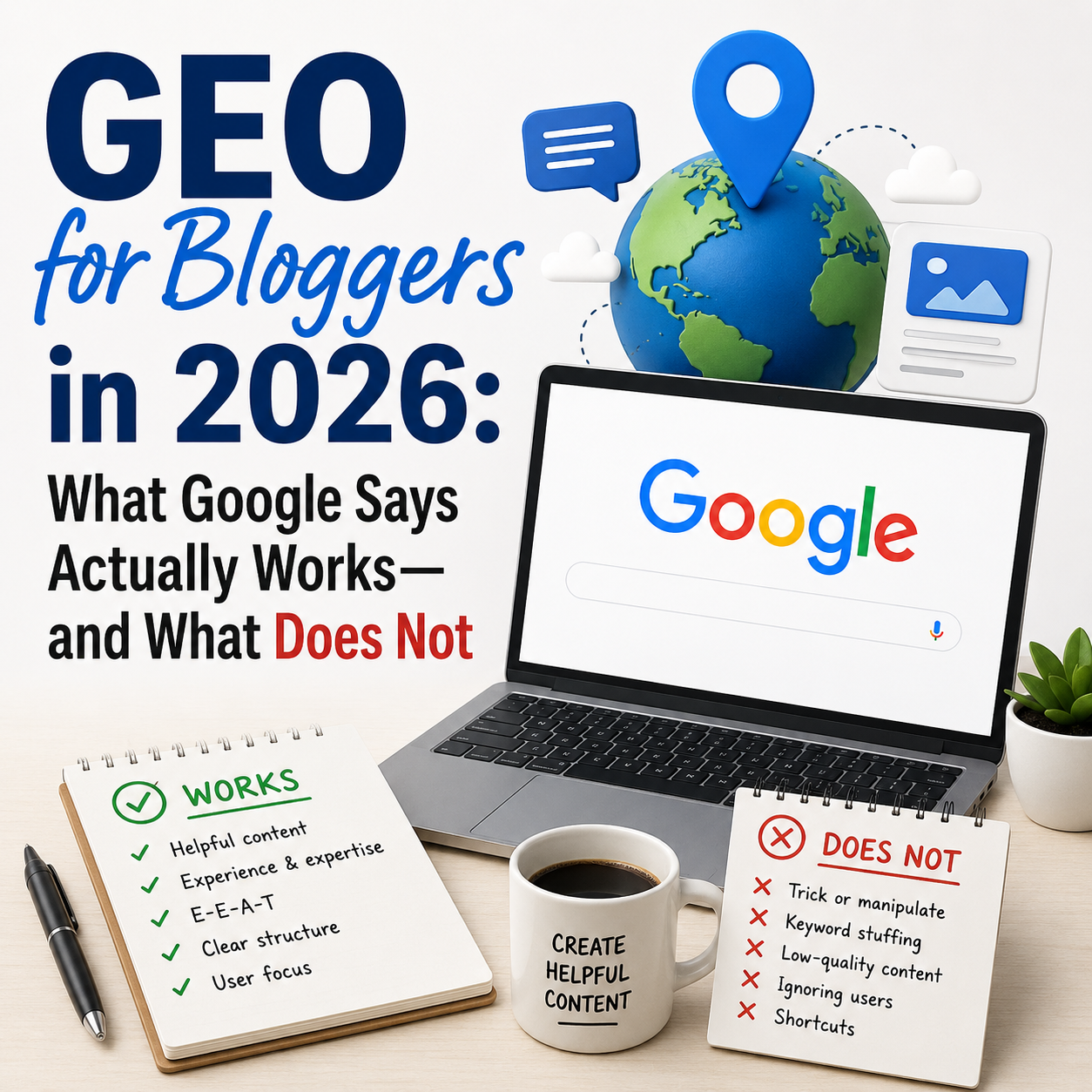
GEO for Bloggers in 2026: What Google Says Actually Works—and What Does Not
Generative Engine Optimization (GEO) means writing blog content so AI Overviews, AI Mode, and similar AI search systems can find, understand, and cite it accurately. In May 2026, Google published its first official Search Central guide on optimizing for generative AI, stating that core SEO fundamentals still apply, llms.txt files get no special treatment, and multi-topic pages don’t need manual chunking. Recent independent research from Ahrefs, Evertune, and Seer Interactive complicates parts of that guidance, especially around passage-level specificity and E-E-A-T signals. This guide separates verified Google statements from unverified GEO claims and gives bloggers a realistic 2026 action plan.

What “GEO” Actually Means for a Blogger
GEO gets used loosely, so it helps to define it before deciding what to do about it. For a blogger, GEO simply means writing and structuring posts so an AI system—Google’s AI Overviews, AI Mode, ChatGPT, or Perplexity—can retrieve the right passage, understand it correctly, and cite your blog as the source rather than paraphrasing you into anonymity.
That’s a narrower goal than most “GEO agencies” imply. It doesn’t require a separate content format, a hidden machine-readable file, or a rewritten version of your site. It requires the same things that have made blog posts rank well for a decade: clear structure, accurate information, and content a search engine’s underlying quality systems consider trustworthy. What’s new is the delivery mechanism, not the underlying test.
Google’s Official Guidance: The May 2026 Search Central Update
On May 15, 2026, Google published “Optimizing your website for generative AI features on Google Search,” its first formal Search Central documentation on the topic, housed under a new “Generative AI fundamentals” section. Google’s own framing is direct: their generative AI features are built on the same ranking and quality systems that power traditional search, so from Google Search’s perspective, optimizing for generative AI search is optimizing for the search experience, and thus still SEO. Digital Applied Team Search Engine Journal
The guide includes a section its own authors informally call “mythbusting,” and it names several popular GEO tactics as unnecessary for Google specifically.
llms.txt: Discovered, Not Used
Google has been explicit here: llms.txt files neither help nor hurt Google search rankings, and Google Search does not use llms.txt files at all. The guide states plainly that you don’t need to create new machine-readable files, AI text files, markup, or Markdown to appear in Google Search, since Google Search itself doesn’t use them—though the crawler may still discover and index the file the way it would any other text file on your server. GoogleGoogle
Chunking: Google Says Skip It—Data Says Be Careful
Google’s position is that there’s no need to break content into small pieces for AI systems, because its systems can understand multi-topic pages and extract the relevant passage without the author pre-fragmenting the article. In practice, that means you don’t need to publish separate mini-articles or force one idea per paragraph purely for machine parsing. arxiv
Schema, Markdown, and AI-Specific Rewriting
The guide also downplays three more common GEO recommendations. Special schema or Markdown versions of pages are not required for Google generative AI search inclusion, and Google says its systems can already understand synonyms and general meanings, so rewriting content to capture every long-tail keyword variation isn’t necessary. Structured data still supports rich results and entity clarity in standard search, but it is not a shortcut into an AI Overview. arxivarxiv
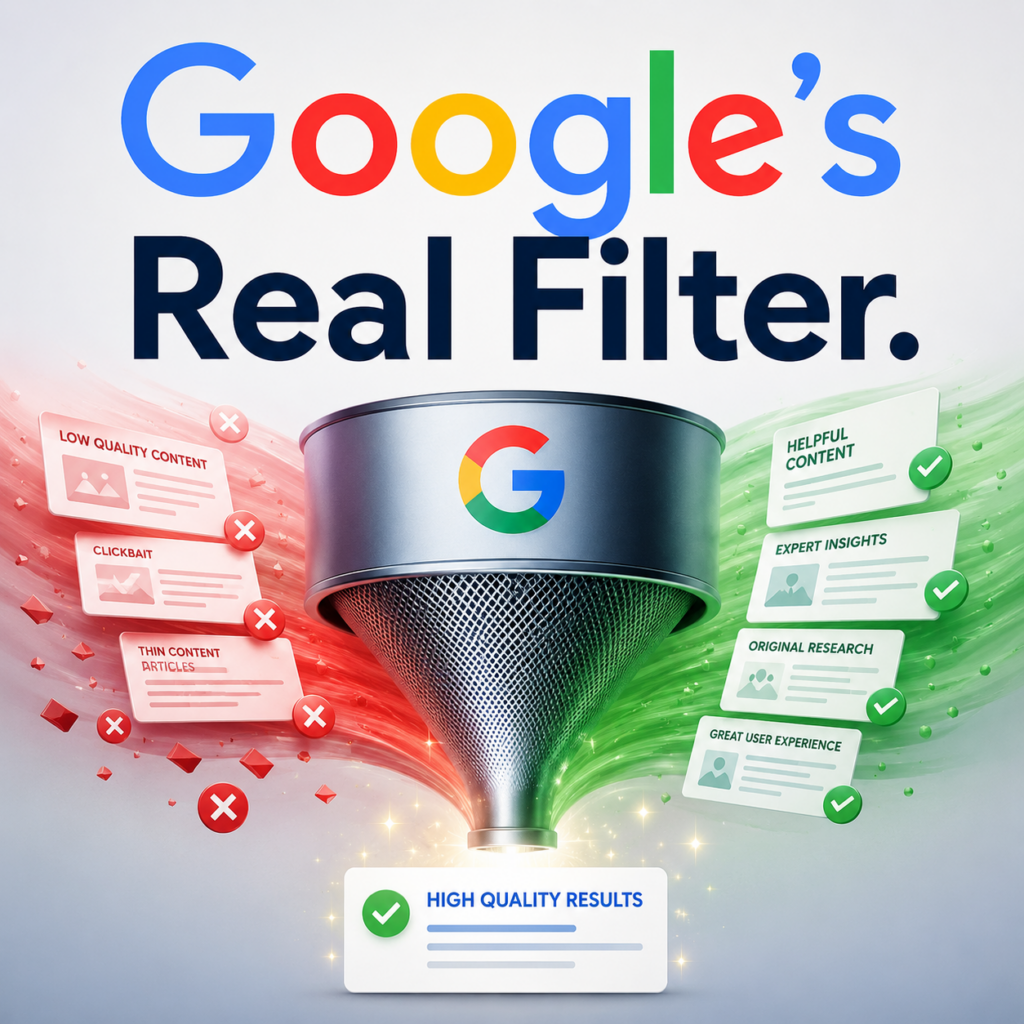
The Commodity Test: Google’s Real Filter
The single most important sentence in Google’s guide is this instruction: create non-commodity content that’s helpful, reliable, and people-first, focused on unique, expert-led content that provides value beyond common knowledge. Google also tells site owners to prioritize effective SEO strategies over “AEO/GEO hacks,” and for Google Search, ignore tactics like chunking content, creating unnecessary AI text files such as llms.txt, or pursuing inauthentic mentions. QuattrQuattr
“Non-commodity” is the operative word. A practical way to apply it: before publishing, ask whether a generative AI model, prompted with your headline, could produce an equally useful version of the page without you. If yes, the page is commodity content—generic, interchangeable, and exactly what AI Overviews are built to synthesize and replace rather than cite. If the answer is no, because the post contains something only you could have produced—an original test, a specific number with context, a documented mistake, a screenshot from your own account—it clears the bar Google is actually describing.
This distinction matters more for a solo blogger than for a large publisher. You can’t out-publish a media company on volume, but you can consistently produce non-commodity content because you’re the one doing the work the article describes.
Where Independent Research Pushes Back
Google’s guidance is the most authoritative statement available, but it isn’t the only evidence, and some of it complicates the “just do SEO” message.
Ranking still matters, but less than it used to. Ahrefs analyzed 1.9 million AI Overview citations and initially found that roughly 76.1% of AI Overview-cited pages ranked in the top 10 of Google’s organic results. By March 2026, a larger follow-up study of 863,000 keywords and 4 million AI Overview URLs found that figure had fallen to just 38%, with the remainder split almost evenly between pages ranking outside the top 10 and pages with no meaningful organic visibility at all. Ahrefs attributes part of the shift to improved citation-tracking and part to Google’s query fan-out process, where an initial search is broken into related sub-queries and pages are cited based on how well they perform across that whole cluster, not just one keyword.
Passage-level clarity may matter even if “chunking” doesn’t. Google says you don’t need to fragment articles for AI systems. That’s a distinct claim from whether specific, self-contained passages get cited more often—several independent studies suggest they do. A page can remain one coherent article while still giving each section a clear, standalone answer near the top, which serves human skimmers and AI extraction at the same time without turning your post into a checklist of disconnected fragments.
E-E-A-T signals correlate with citation, even though Google frames them as pre-existing ranking factors, not new AI-specific ones. Industry-reported analysis from Seer Interactive found that roughly 96% of pages cited in AI Overviews carry verifiable E-E-A-T signals—that figure comes from an industry study, not a Google-published number, but it’s directionally consistent with Google’s own statement that best practices for SEO continue to be relevant because generative AI features on Google Search are rooted in Google’s core Search ranking and quality systems.
The practical read: Google isn’t wrong that fundamentals matter. It’s just that “fundamentals” in 2026 increasingly means covering a topic thoroughly enough to survive being broken into sub-queries, not winning one keyword.
A Realistic GEO Checklist for Bloggers
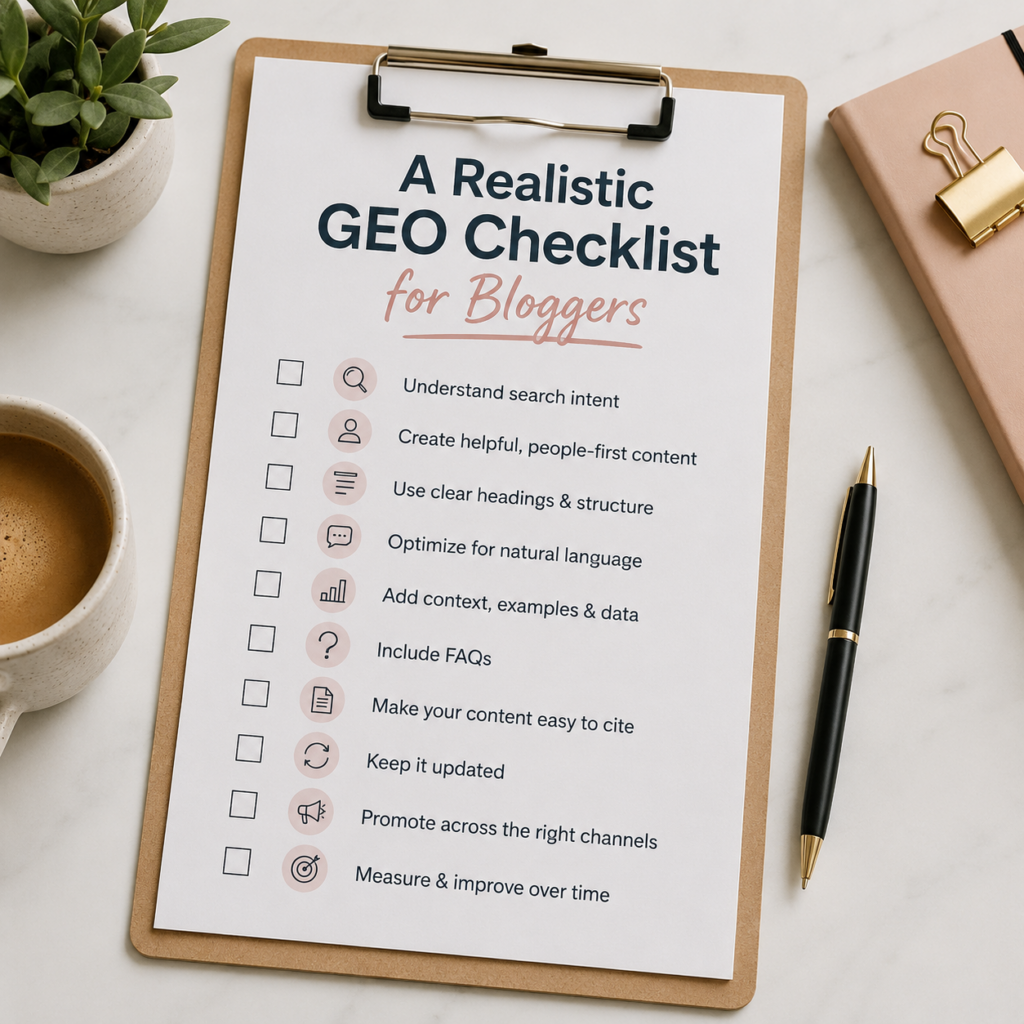
Given both the official guidance and the outside data, a workable priority list looks like this:
- Write content that documents something you actually did, tested, or measured—your own workflow, not a rewrite of someone else’s.
- Answer the core question directly within the first sentences of each major section, then expand with evidence.
- Keep clean heading hierarchy (H2/H3) so both readers and crawlers can map the article’s structure.
- Cover a topic’s realistic sub-questions in the same article rather than splitting them across thin, separate posts.
- Use structured data where it’s genuinely relevant to your content type, not as an AI-visibility tactic.
- Skip llms.txt for Google specifically; it’s harmless if you maintain one for other AI crawlers, but it won’t move Google citations.
- Keep author identity, credentials, and update dates visible and accurate.
This intentionally omits things like AI-specific rewriting for every keyword variant or building a parallel Markdown version of the site—Google has said directly that neither changes generative-search visibility, and both consume time you could spend on the non-commodity work Google says it’s actually rewarding.
Non-Commodity Content Self-Check
Before you publish, check the boxes that honestly describe this specific post. The result estimates how likely a generative AI model could have produced the same page without you — the lower that likelihood, the closer your content is to what Google’s guidance calls “non-commodity.”
Check the boxes above that apply to this post.
Use this before you hit publish, not as a scoring system for old posts. If a post consistently checks fewer than three boxes, it's a strong candidate for updating with real detail before you worry about any technical GEO tactic.
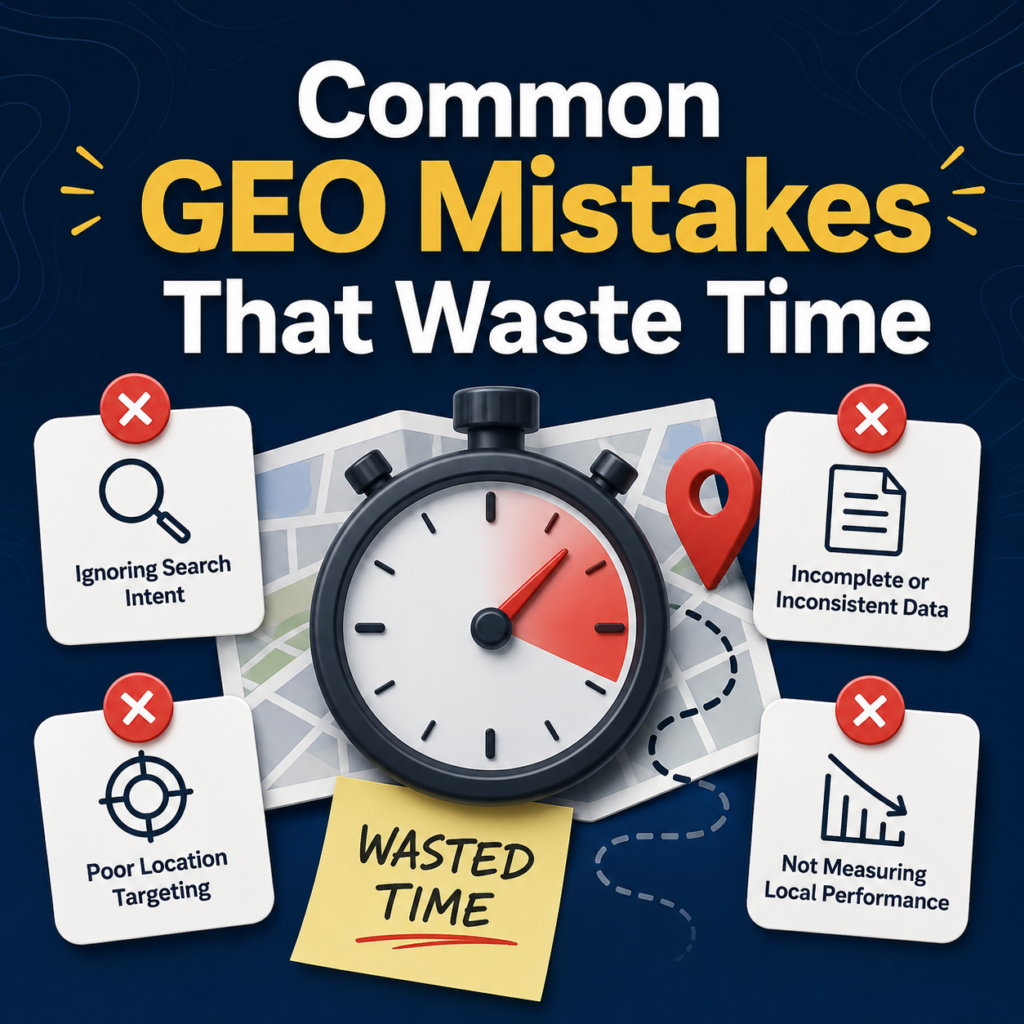
Common GEO Mistakes That Waste Time
The biggest mistake bloggers make right now is treating GEO as a new discipline that requires new tools, when Google has told the industry directly that GEO and AEO don't require separate frameworks for its own search surfaces. Chasing llms.txt generators, AI-specific rewriting services, or "AI schema" plugins for Google visibility spends time on tactics Google's own documentation says won't move the needle. Search Engine Journal
A second mistake is ignoring Pinterest SEO for Beginners as an amplification channel while over-indexing on Google alone. AI Overviews and AI Mode pull from a wider source pool than they used to, and platforms like YouTube have become heavily cited outside the top 100 organic results—diversifying discovery, not just ranking position, is now part of realistic visibility strategy.
A third mistake is publishing thinner, more fragmented posts specifically because someone said AI prefers short chunks. Google's own guide contradicts that. If short, fragmented posts also hurt reader trust and time-on-page, they can quietly damage the ad revenue that content already earns; that's a good reason to revisit How to Write High-RPM Posts for Fast Ad Revenue before restructuring an entire content library around an unverified tactic.
Finally, some bloggers treat AI Overview visibility as a replacement for a monetization plan rather than one input into it. Even a well-cited post needs a clear path to revenue behind the click—worth reviewing alongside How to Monetize a Blog Fast (Beginner-Friendly Blueprint for 2025–2026) if that structure isn't already in place.
Frequently Asked Questions
Bloggers adjusting their content strategy for 2026 tend to ask the same handful of questions once they've read Google's official guidance and the surrounding research. The answers below focus on what's actually documented rather than repeating GEO-industry marketing claims that aren't supported by Google's own statements.
Does Google actually use llms.txt files for AI Overviews?
No. Google has stated directly that Google Search does not use llms.txt files in any special way, even though its crawler may discover and index the file like any other text file on a site. Creating one won't help your AI Overview visibility on Google, and not having one won't hurt it either. The file may still be useful for other AI crawlers and services that do reference it, such as certain third-party tools, so there's no harm in maintaining one for non-Google purposes. For Google specifically, the same outcome is achieved through normal crawlable, well-structured HTML content rather than a separate machine-readable file placed at the site root.
Do I need to break my articles into short chunks for AI search?
According to Google's official guidance, no. Google states its systems can understand multi-topic pages and extract the relevant passage without an author pre-fragmenting the article into small pieces. That said, giving each section a clear, self-contained answer near the top still helps both human readers and AI extraction, so the practical move is writing clearly organized long-form content rather than splitting one article into several thin ones. Independent research on passage-level citation suggests specificity within a section matters, which is a separate issue from artificial chunking, and conflating the two can lead to shorter, less useful posts that hurt reader experience without improving AI visibility.
Does ranking in the top 10 still matter for AI Overview citations?
It matters less than it used to, but it still matters. Ahrefs' large-scale analysis found that the share of AI Overview citations coming from top-10 organic pages fell from roughly 76% in mid-2025 to about 38% by early 2026, with the rest split between pages ranking outside the top 10 and pages with little or no visible organic ranking. This shift is linked partly to Google's query fan-out process, which breaks a search into related sub-queries and pulls citations from across that broader cluster rather than from one ranking position. Strong rankings remain a meaningful advantage, but comprehensive topic coverage now plays a larger role than it did previously.
Is structured data required to appear in AI Overviews?
No, and Google's guide states this explicitly: there is no special schema markup required for inclusion in generative AI search features. Structured data remains useful for standard search functions such as rich results, entity clarity, and helping Google understand page types like articles, FAQs, or reviews, so it's worth implementing correctly where genuinely relevant. It simply isn't a shortcut or requirement specifically for AI Overview or AI Mode citation, and adding markup purely as an AI-visibility tactic is unlikely to produce the result some GEO guides suggest. Accuracy between the markup and the visible page content matters more than the presence of markup itself.
What should a small blog prioritize first for GEO in 2026?
Prioritize the same things Google names directly: original, expert-led, non-commodity content that couldn't have been produced by a generic AI response, organized under a clear heading structure with direct answers near the top of each section. Skip llms.txt creation, AI-specific keyword rewriting, and manual content fragmentation for Google, since the company has said none of these affect its generative AI features. After the content itself, focus on crawlability, accurate author information, and keeping time-sensitive facts updated, since Google's guidance repeatedly ties AI visibility back to the same core quality signals that have driven traditional search rankings for years.
Getting This Right Without Chasing Every New Tactic
The clearest signal in all of this is that Google isn't asking bloggers to reinvent how they write. It's asking them to stop publishing content that a generative model could produce just as easily, and to keep doing the structural and technical basics that have mattered for years. The independent research doesn't contradict that message so much as it adds nuance: rankings alone are a weaker guarantee than they were a year ago, and covering a topic's real sub-questions in one well-organized article now carries more weight than optimizing for a single keyword. A blogger who documents real work, answers questions directly, and keeps facts current is already doing most of what both Google's guidance and the outside data point to—no separate GEO framework required.
Sources
- Google Search Central — Optimizing your website for generative AI features on Google Search, May 15, 2026
- Google Search Central Blog — A new resource for optimizing for generative AI in Google Search, May 15, 2026
- Search Engine Journal — Google's New AI Search Guide Calls AEO And GEO "Still SEO", May 15, 2026
- Search Engine Land — Google says llms.txt files won't harm or help your search rankings, June 16, 2026
- Ahrefs — Update: 38% of AI Overview Citations Pull From Top 10 Pages
- Ahrefs — How Do Search Rankings Correlate With AI Citations?
- Search Engine Journal — Google AI Overview Citations From Top-Ranking Pages Drop Sharply, March 2, 2026
- ALM Corp — Google's AI Optimization Guide: What Helps Content Appear in AI Overviews, AI Mode, and AI Search, May 16, 2026